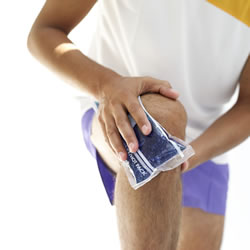
 Knee pain is a frequent issue for patients in our Olympia chiropractic practice, and TJ Delorie has successfully provided many of these men and women relief. This is largely because chiropractic care has been found to help with many types of knee pain.
For instance, some patients feel pain in and around the knee tissues due to osteoarthritis. Research has proven that this condition responds very well to chiropractic--and rather quickly, too. In fact, one paper published in The Journal of the Canadian Chiropractic Association found that men and women with osteoarthritis in their knees felt considerable pain relief and enhanced function after just two weeks of chiropractic care.
If your knee pain is due to a medial meniscus tear, chiropractic could likely help with that as well. One case reported that integrating chiropractic with soft tissue treatment, rest, ice, and compression on the affected knee helped lower the intensity of the pain.
Of course, sometimes a knee replacement surgery is required in order to repair the problem, and if that's the case, chiropractic care can also help improve the outcome. How?
Research Proves Chiropractic Helps With Knee Pain
Research has found that patients with low back pain often have less positive results after knee surgery. Thus, dealing with your back pain through chiropractic before having a total knee arthroplasty can help with your post-surgery healing.
No matter what your knee issue, TJ Delorie can likely help. Call our Olympia practice today and find out what we can do for you!
References
- Pollard H et al. (2008, December). The effect of a manual therapy knee protocol on osteoarthritic knee pain: a randomised controlled trial. The Journal of the Canadian Chiropractic Association;52(4):229-42
Boyle J et al. (2014, March). Influence of low back pain on total knee arthroplasty outcome. Knee;21(2):410-4 - Jarosz B & Ames R. (2010, December). Chiropractic management of a medial meniscus tear in a patient with tibiofemoral degeneration: a case report. Journal of Chiropractic Medicine;9(4):200-8